
6th Silver - English Tareas
- Instructores
- Ciclo Escolar
- Contingencia 2020
- Departamentos
- Primaria
- Descripción
-
Good morning and welcome to our on-line classes!
We will be using this platform for the next couple of weeks to continue our learning process. Though it may seem hard or weird, I'm sure it will be a very enriching and fun experience for us.During this time, you will continue working with phonology, spelling, listening, speaking, reading and grammar following the same methodology that we use in the classroom.Let's begin: Buckle up and enjoy the ride! XD
Tareas por asignar

No hay asignaciones en curso
Tareas pasadas
Vencimiento:
Assignment
Thursday, April 2nd, 2020.
DAILY ROUTINE
Hello boys and girls! Ready for a new class?
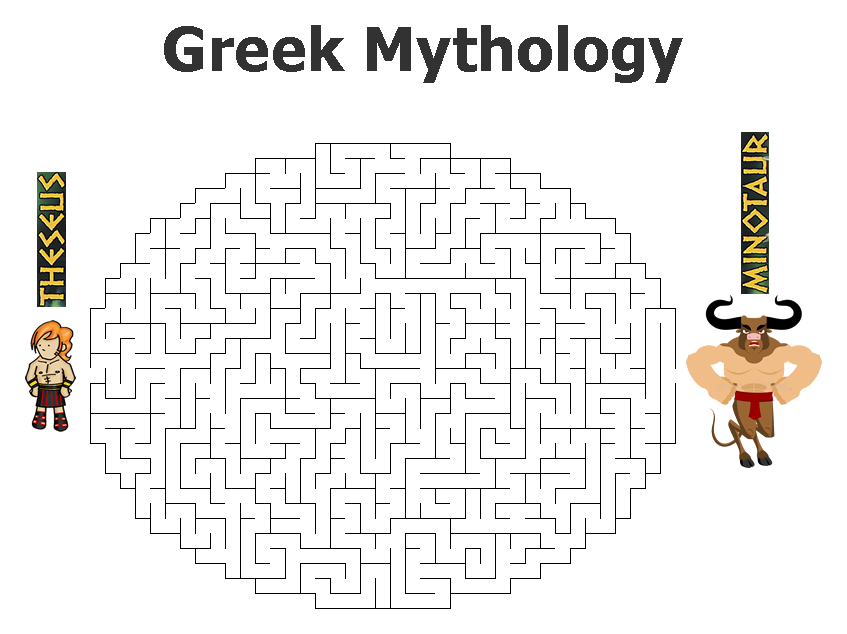
To begin, open the maze of the image MinotaurMaze.png and solve it while listening to your favorite song.
Now, listen to the audio DR6 0402.m4a and follow the instructions for our daily routine, then continue with the listening activities, please.
LISTENING COMPREHENSION
Objectives:
= Identify the main ideas and details of a recorded text.
= Apply knowledge of vocabulary and language to express your likes and interests.
Instructions:
1. Think about how many ways you know to greet and say goodbye, for example, Hi, Hello, What’s up?, See you!, etc.
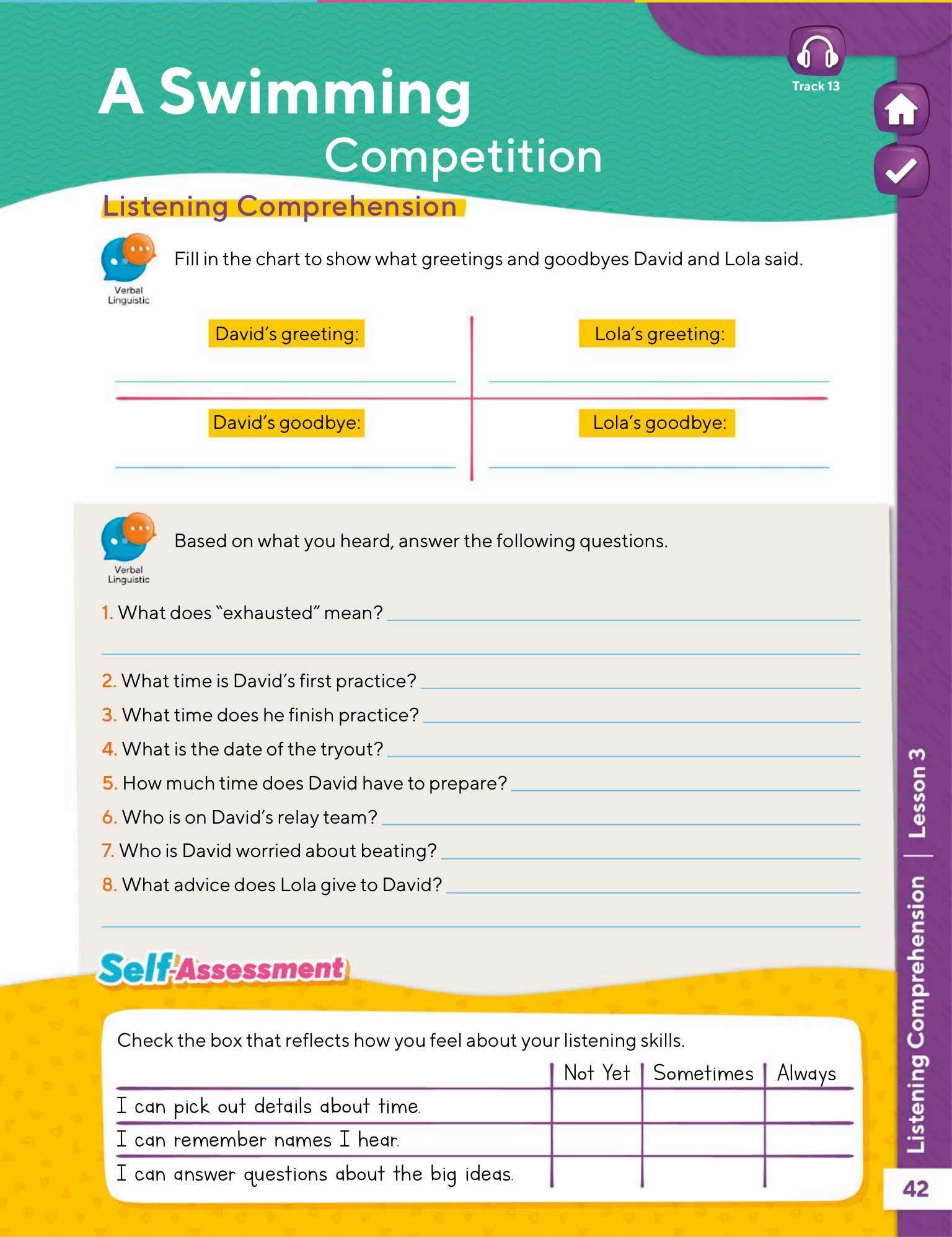
2. Open your book on page 42 and listen carefully to Track 13. Can you remember how did David and Lola say hello and goodbye to each other? Write it down in the chart on the top of page 42.
3. Read carefully the questions from the second activity of the same page and make sure that you understand them all.
4. Listen again Track 13, and answer the questions.
5. Complete the Self-Assessment at the bottom of the page reflecting on how difficult was it for you to gather the information from the audio to answer most of the questions. Could you do it with only one listening? Was it two? Choose always. Did it take you more than that? Choose sometimes. Was it really hard for you or you were missing more than half of the answers? Choose not yet. Remember we all learn at our own pace!
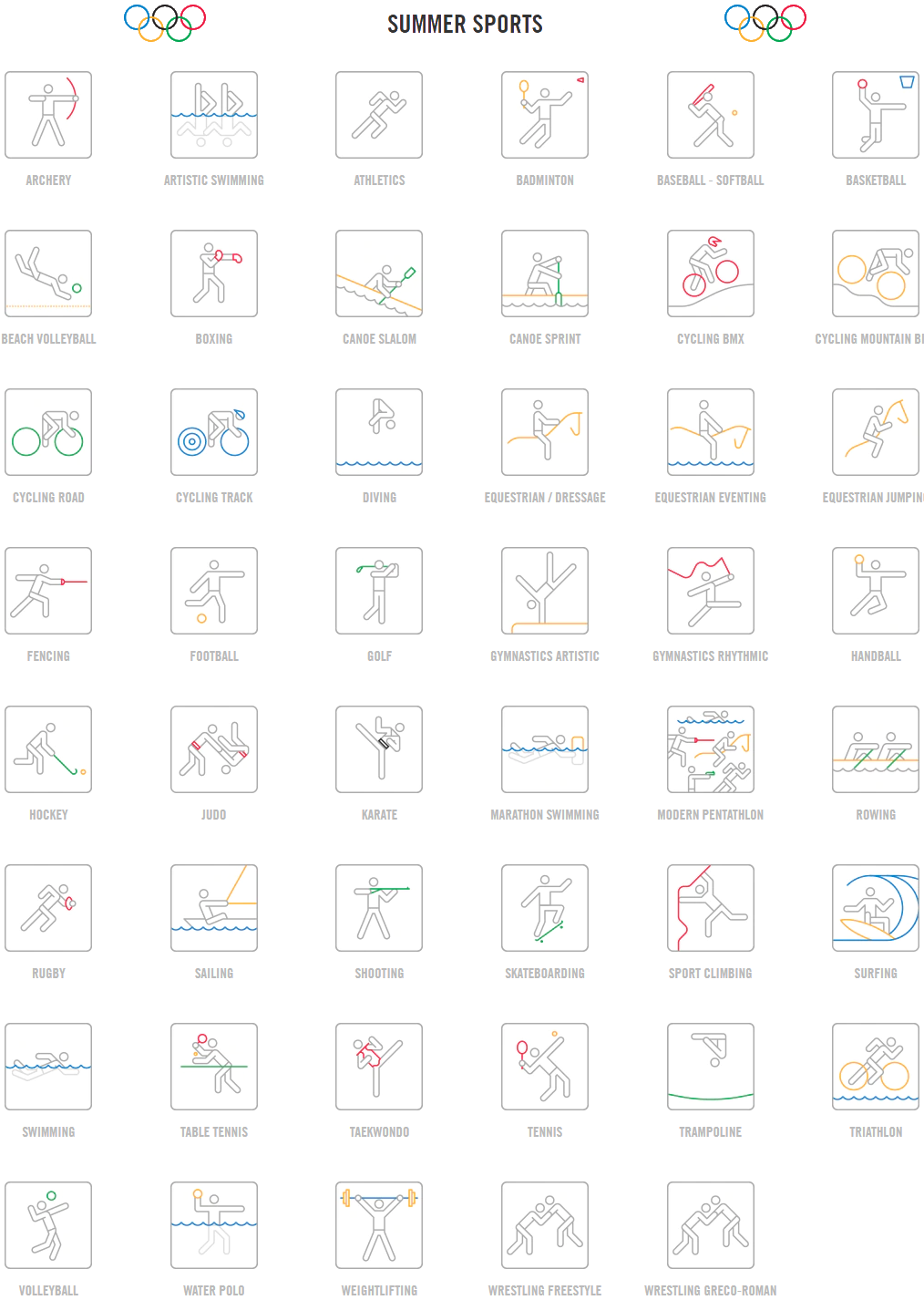
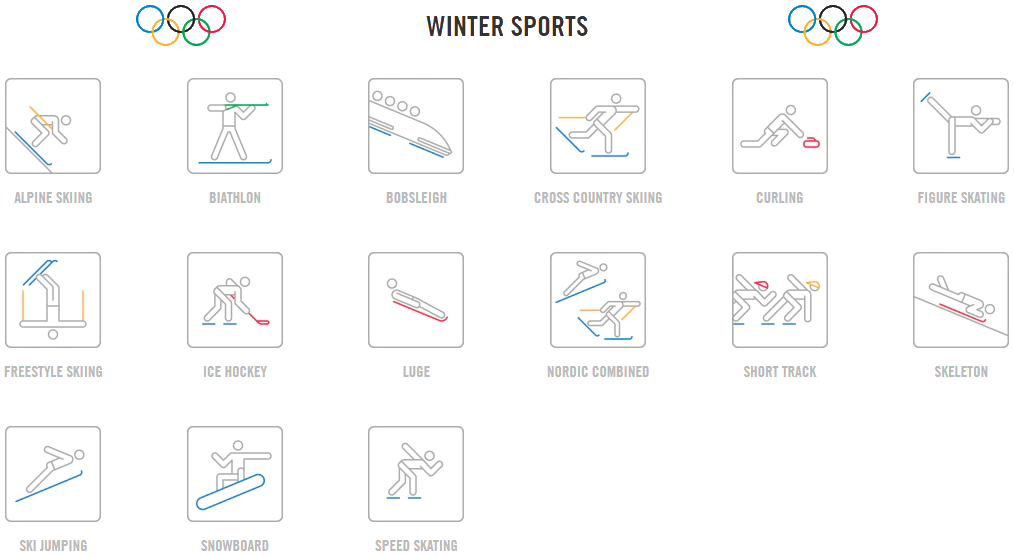
6. Observe the pictures of all the sports played during the Olympic Games (Olympics1.jpg and Olympics2.jpg)
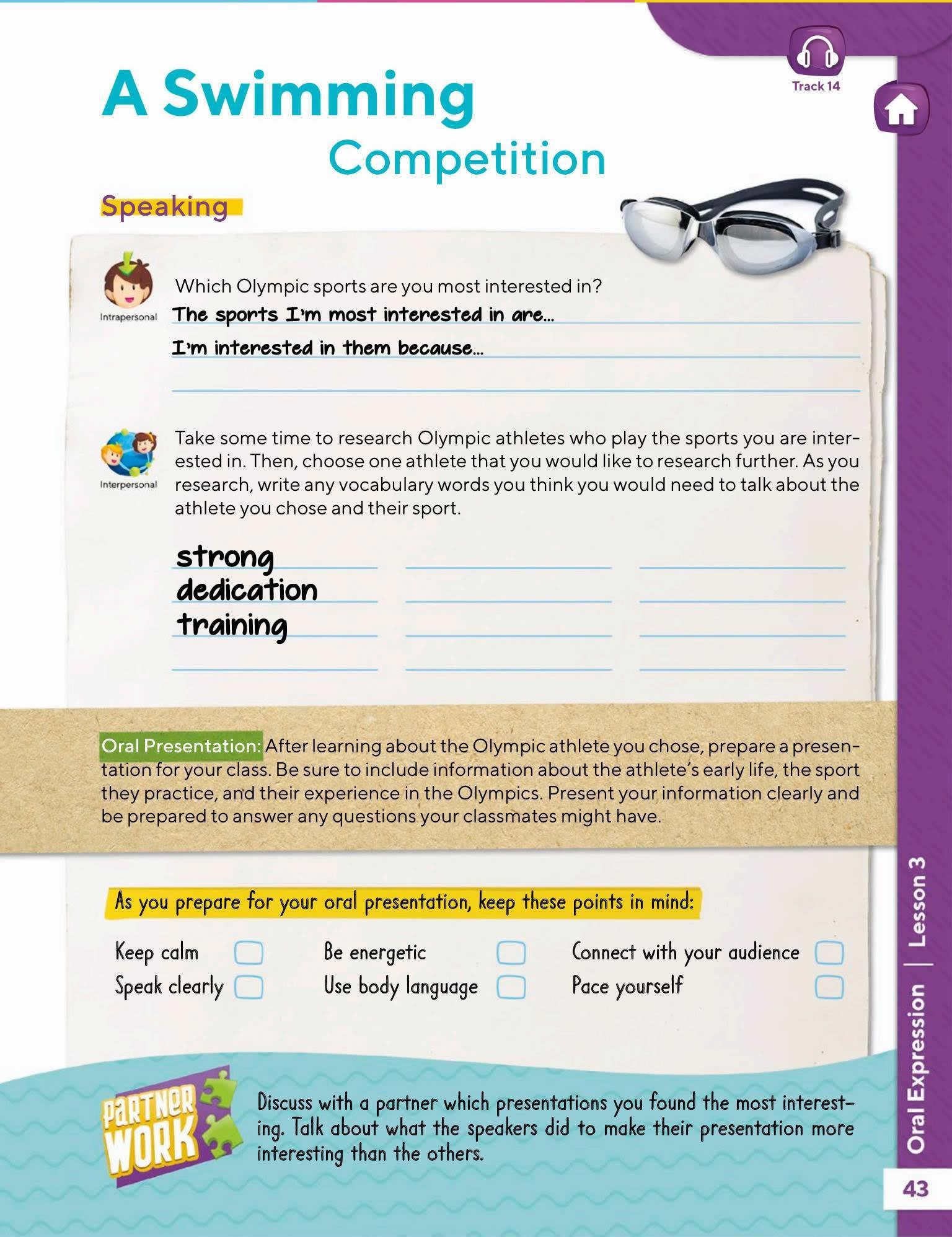
7. Turn to page 43 (EVIDENCE) and answer the first question of which sports from the pictures you just observed do you like the most and why?
8. Investigate on the Internet about some athletes who play the sports that you choose.
9. Choose one of those athletes and investigate more about his competitions and accomplishments. Then, write a list (page 43) of the words you need to describe that athlete and his competitions, for example: strong, dedicated, successful, winner, etc.
KNOWLEDGE OF THE WORLD
Objectives:
= Explore Age of Discovery.
= Identify basic facts on the History of Transportation.
Instructions:
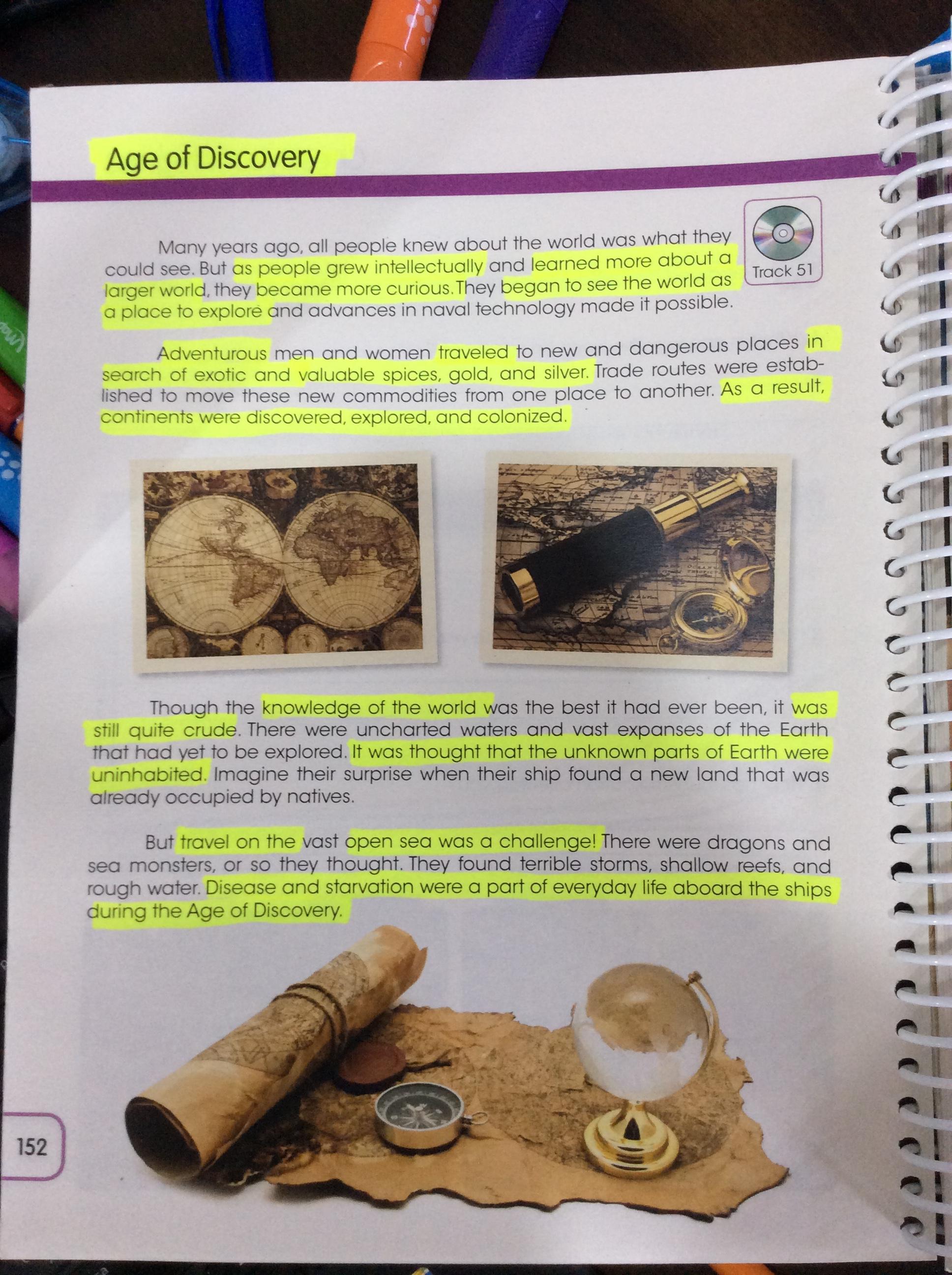
1. Open your Knowledge book on page 152.
2. Play Track 51 and follow the reading about Age of Discovery.
3. Read it again and underline the main ideas and details. (K6 P152.jpg).
4. In your notebook, write the date and make the border with color purple.
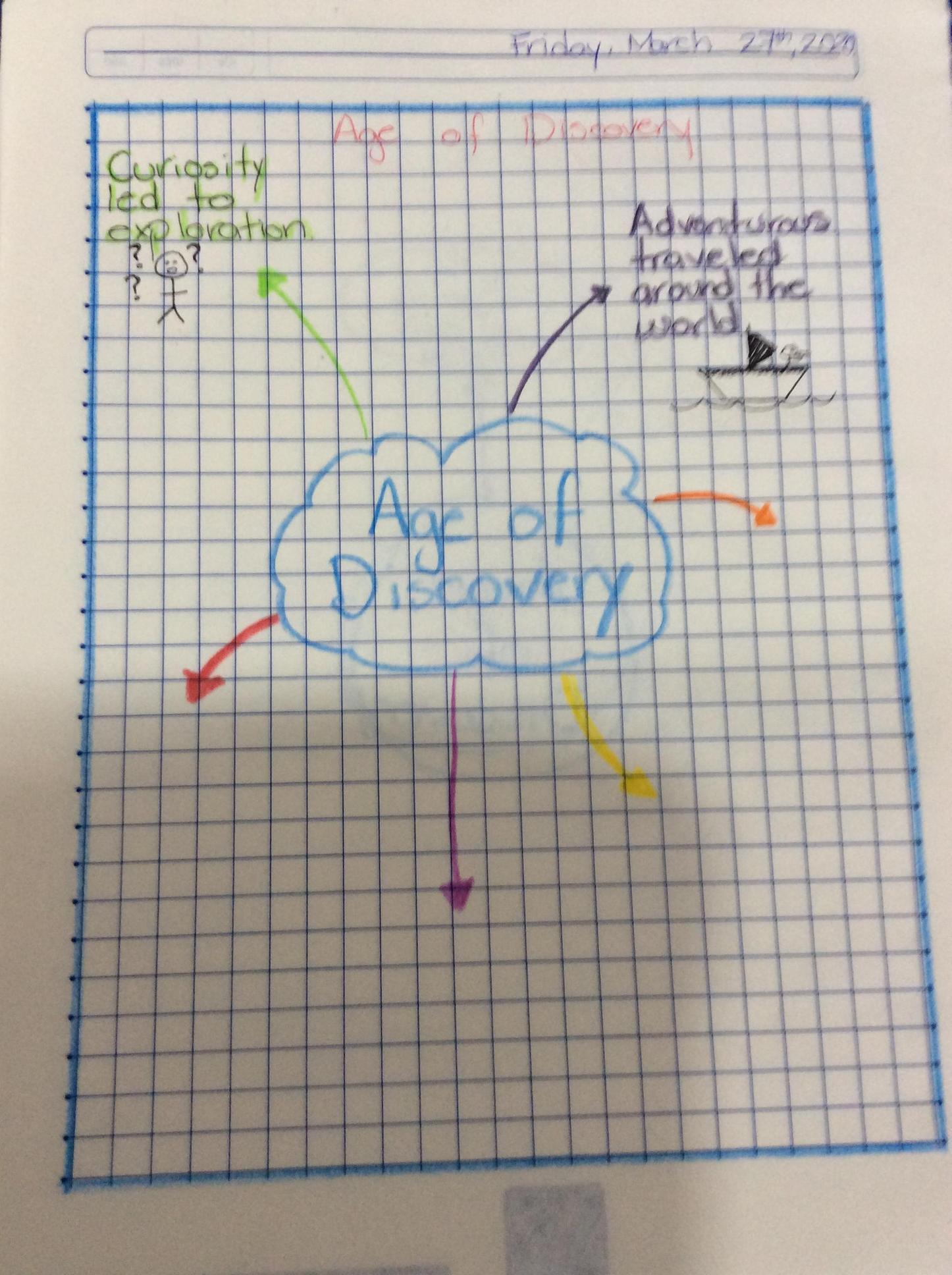
5. Write the title “Age of Discovery” and make a mind map of the Age of Discovery (EVIDENCE) including only the most important facts mentioned in the video and the reading. Remember to include drawings or pictures and keywords. Use the image Discovery Map.jpg as a guideline.
6. Watch the videos “History of transportation” and “Transportation in America”
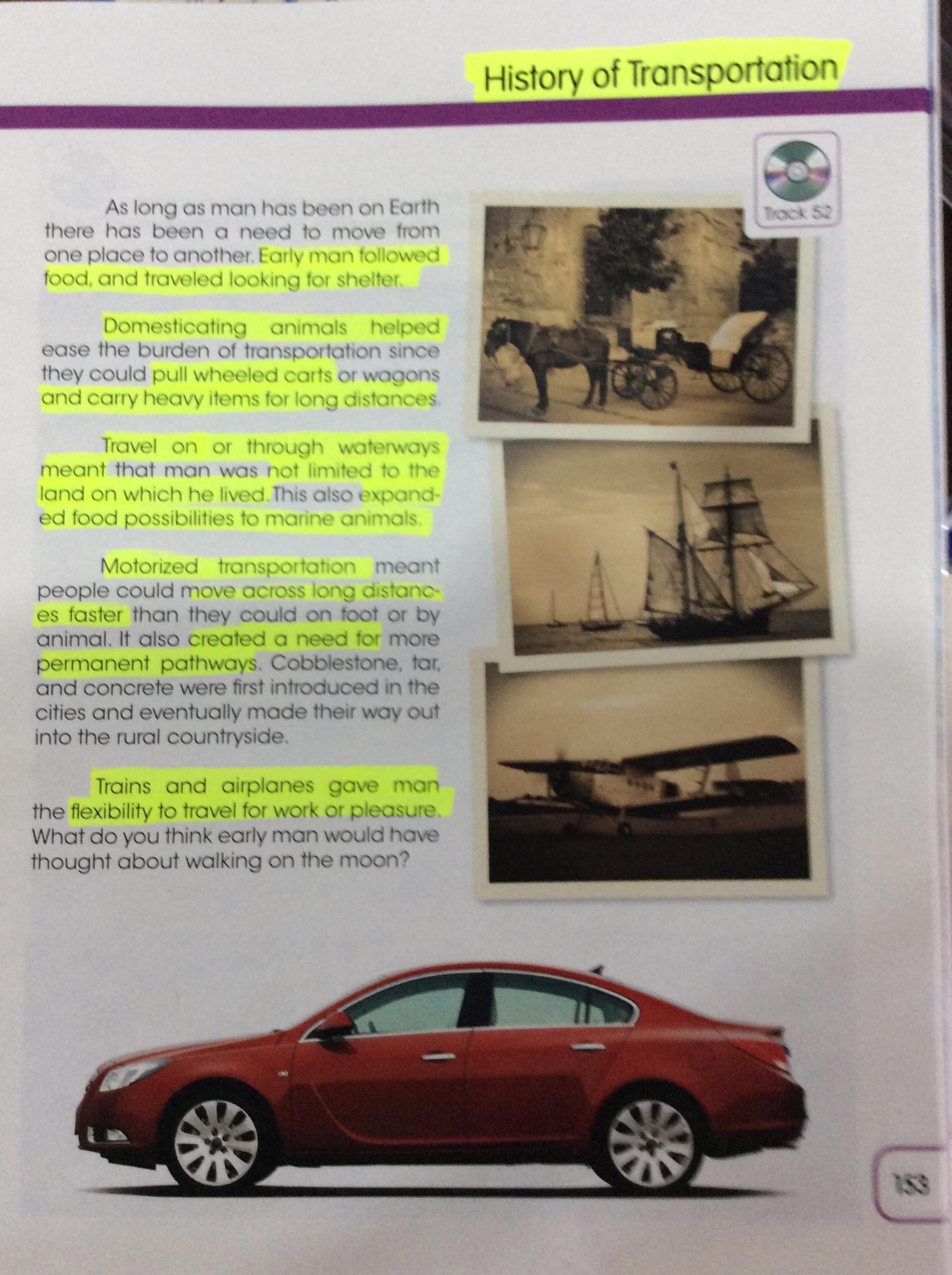
7. Play Track 52 and follow the reading about Age of Discovery.
8. Read page 153 (K6 P153.jpg) again and underline the main ideas and details.
9. In your notebook, write the date and make the border, now with color green.
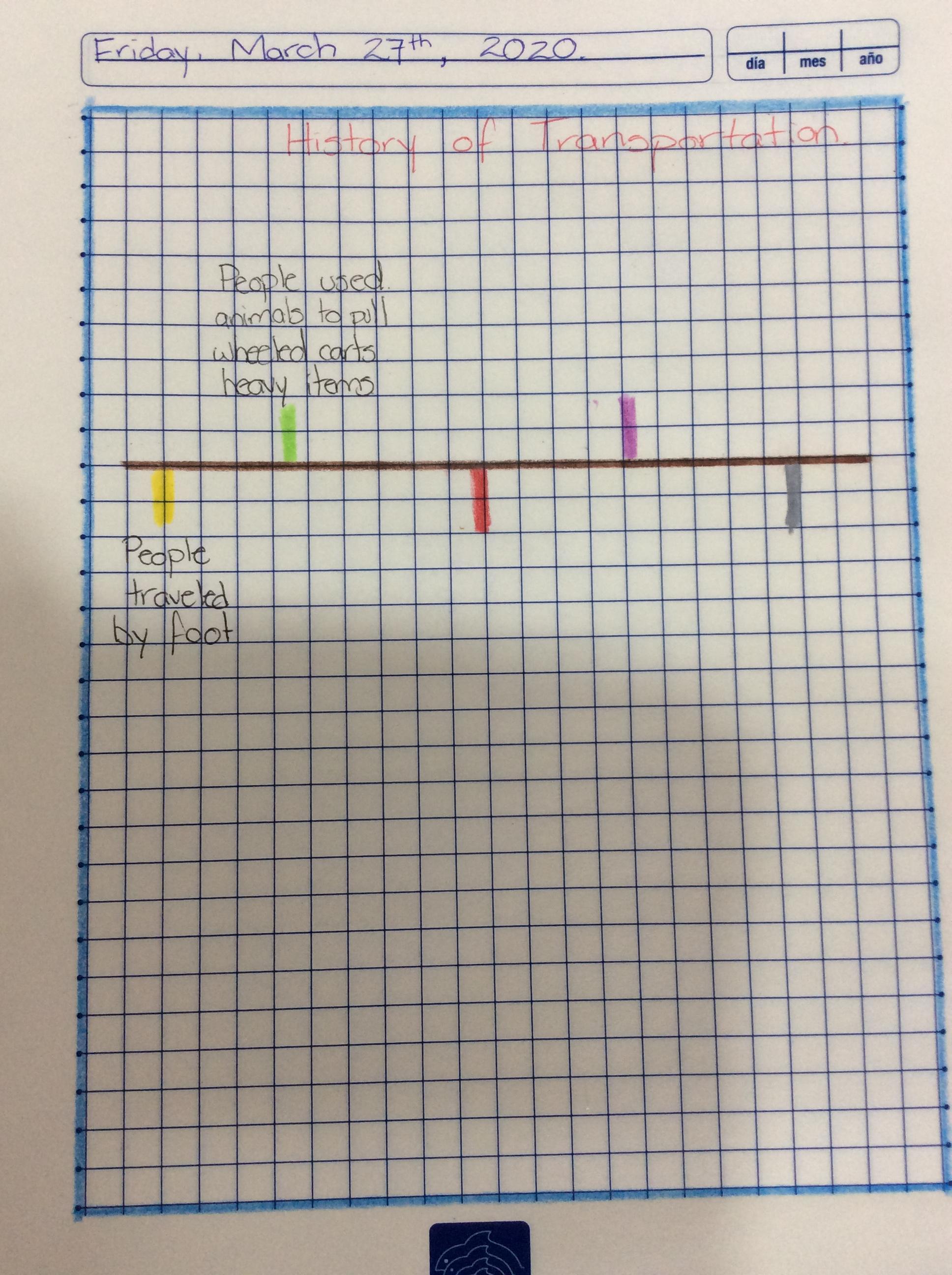
10. Make a timeline (EVIDENCE) about the History of Transportation to show how has it evolved over the years. Check the image Transportation Timeline.jpg for guidance. Include pictures or drawings to illustrate each event.
That’s all for today, enjoy the rest of the day.
See you tomorrow for our last class before the holidays!
Send pictures of your EVIDENCES: page 43 of your Lead book, the mind map and timeline in your notebook to my e-mail:
Write your name and the date of the activities as Subject.
Vencimiento:
Assignment
Wednesday, April 1st, 2020.
DAILY ROUTINE
Good morning! We’ll start today listening to the audio DR6 0401.M4A.
PHONOLOGY/SPELLING
Objectives:
= Relate vocabulary words to their definitions.
= Use words correctly in context, showing correct application of the words’ meanings.
= Reproduce words with correct pronunciation.
Instructions:
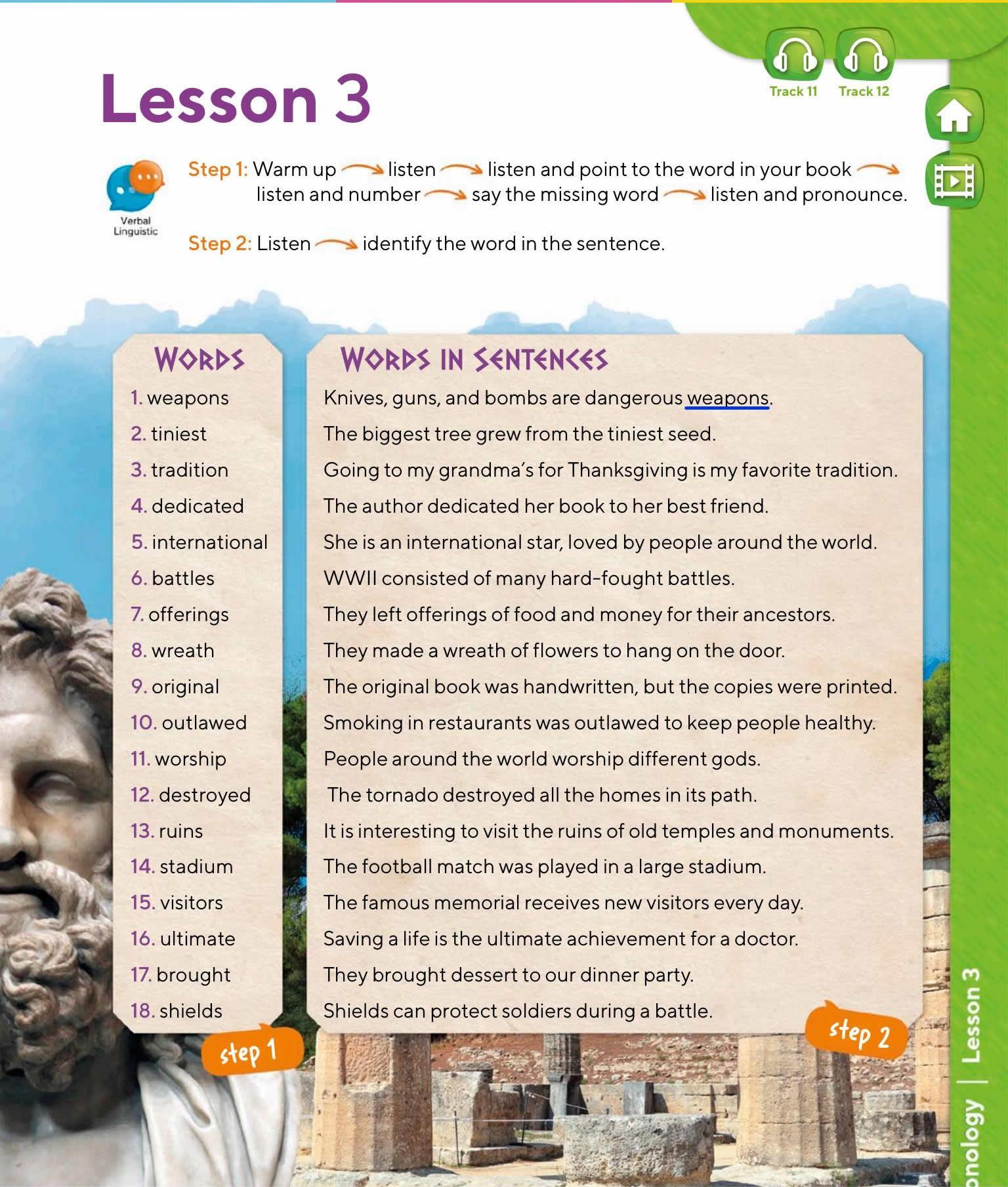
1. Open your Lead book on page 35.
2. Listen to Track 12 and follow it pointing with your finger the words and sentences, identifying the vocabulary word in each sentence and underlining it with color blue.
3. Analyze each sentence to figure out the meaning of each word. If you can’t figure it out, you may use a dictionary.
4. In your notebook, write the date and the title “Vocabulary Lesson 3”, and then make a list with the vocabulary words and write next to each of them a synonym, the meaning using your own words (in English), or a sentence using the word, or draw a picture related to the word, that helps you remember the meaning.
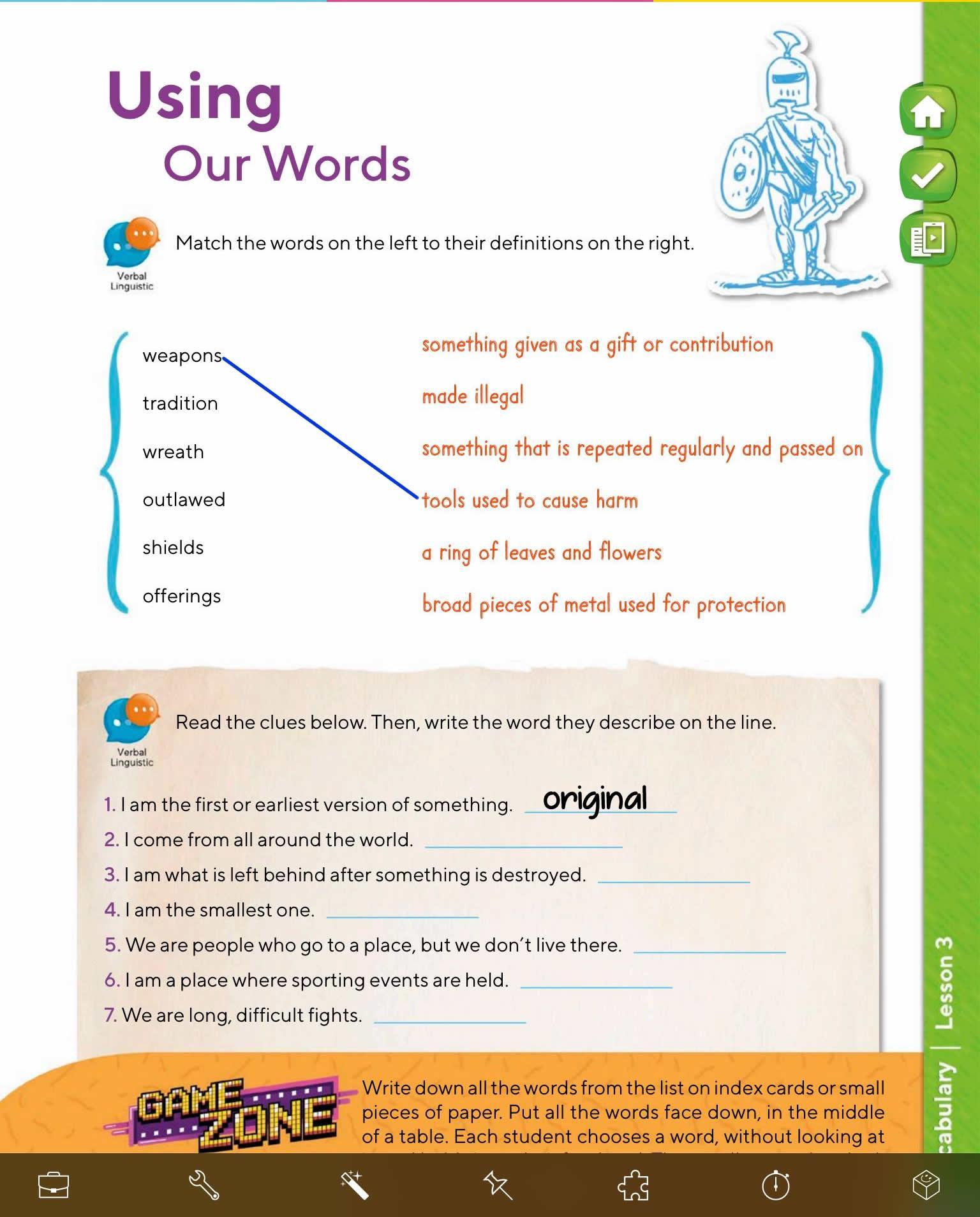
5. Go to page 39 (EVIDENCE), read carefully the instructions of both activities and complete the work.
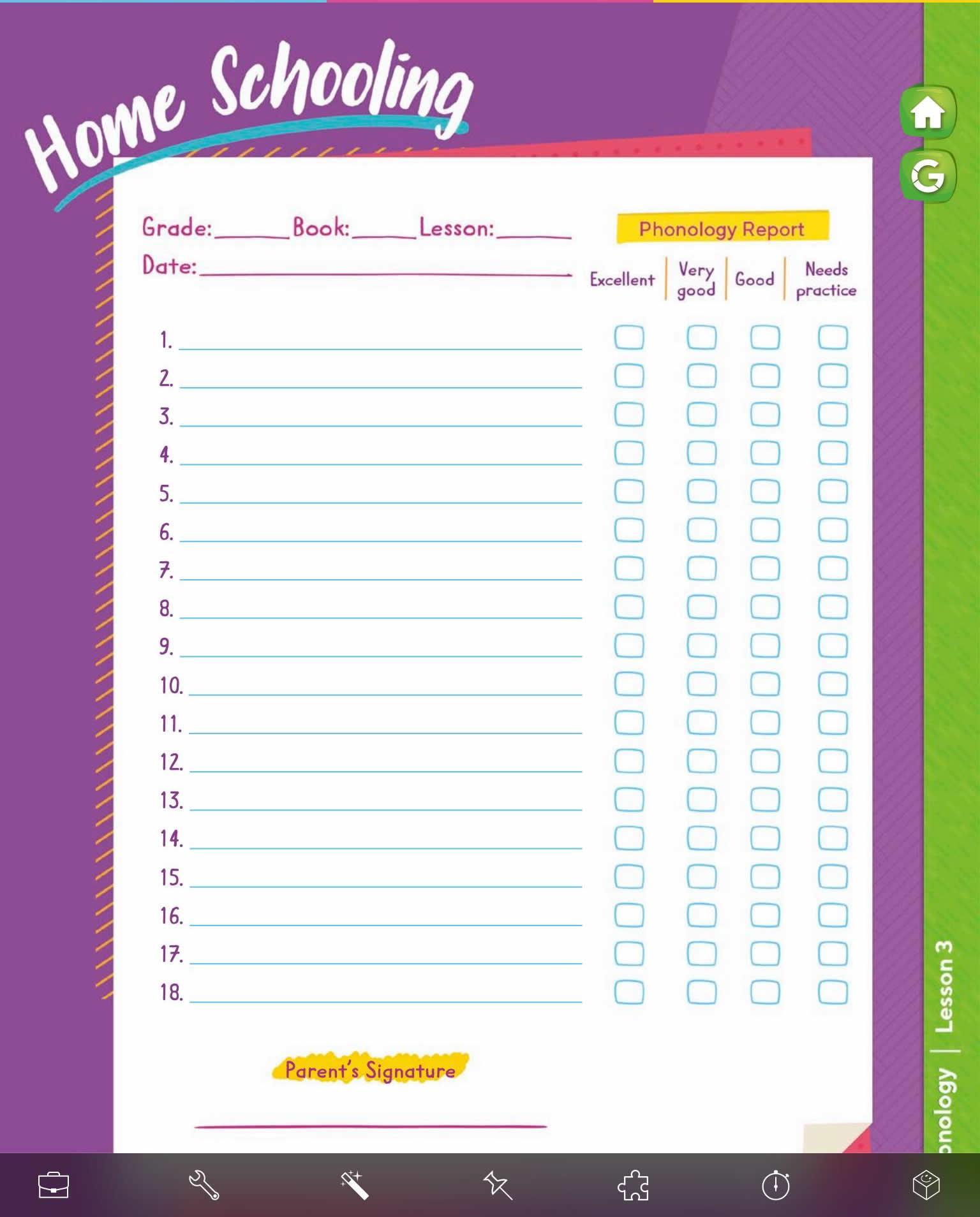
6. Turn to Home Schooling 3 on page 40 (EVIDENCE). Listen to Track 11 and write down the vocabulary words in the order of the audio. Verify that the order and spelling are correct using the file HS6 L3.pdf.
7. Complete the Home Schooling as you usually do, with help of your mom or dad.
8. Study the vocabulary words for tomorrow’s dictation.
LANGUAGE
Objective:
= Apply knowledge of grammatical patterns and rules in context using colons.
Instructions:
1. Watch the videos “Colon Use” and “Ratios Basics”.
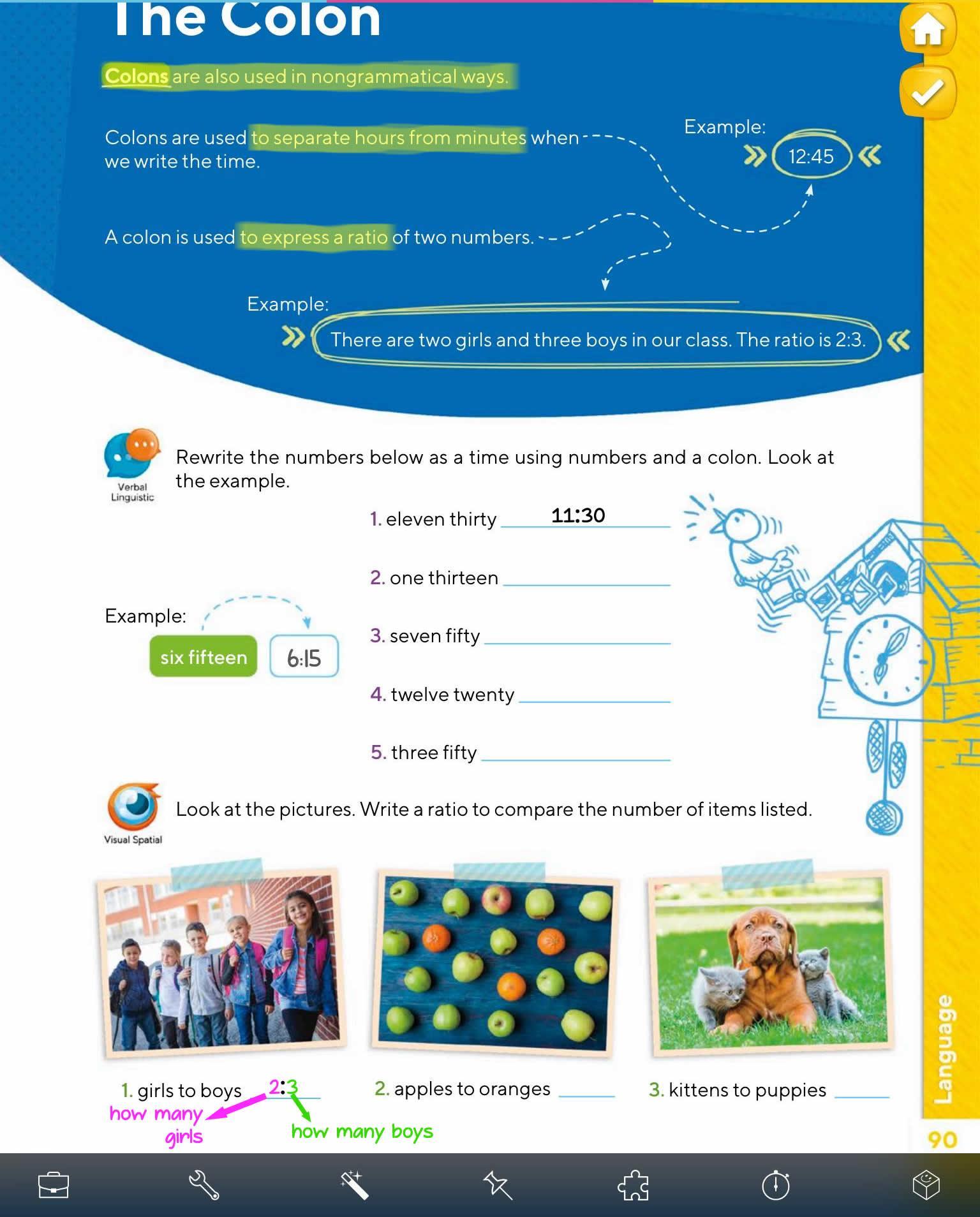
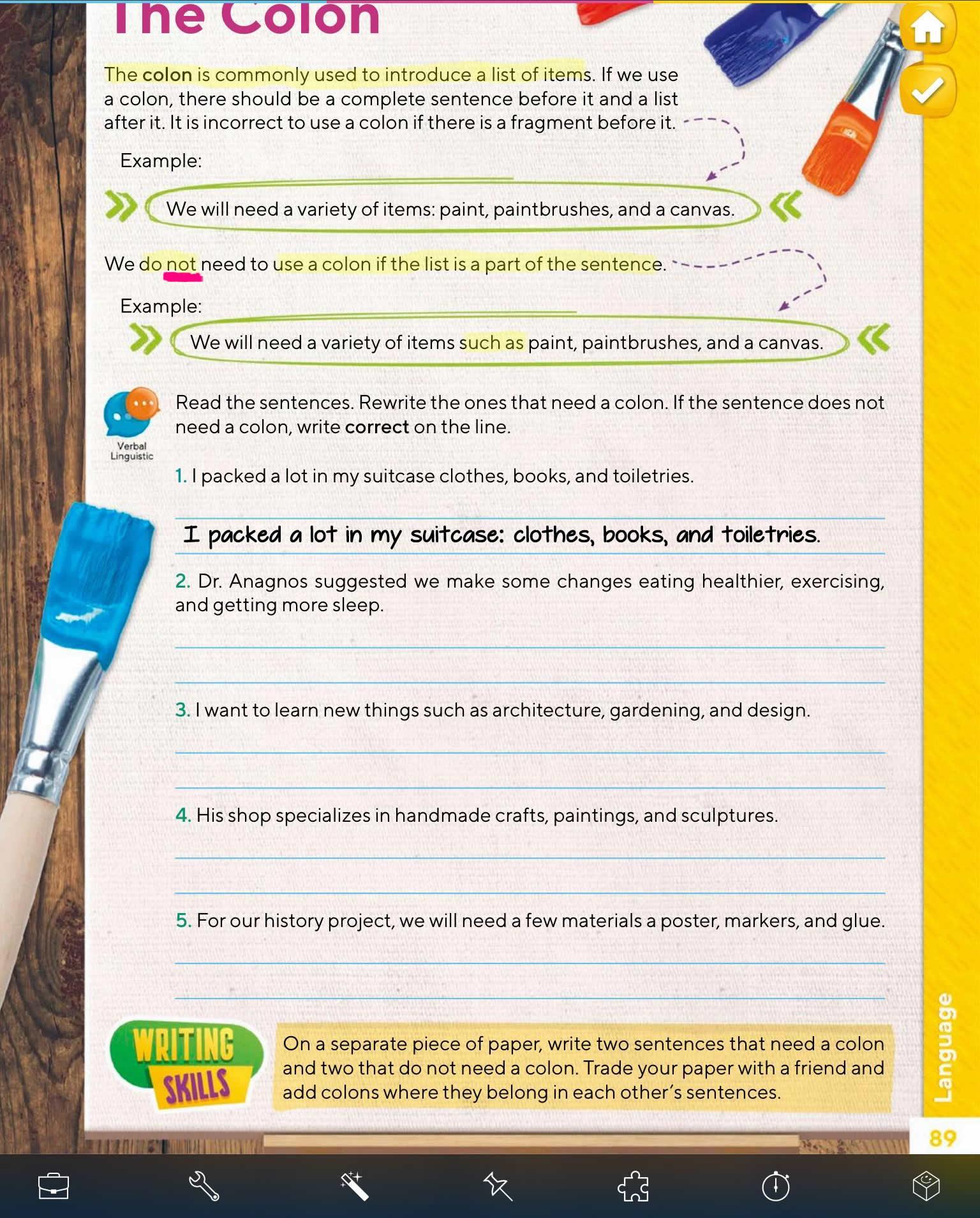
2. Read the information and examples on page 89 and 90 and underline or highlight the main ideas.
3. Follow the instructions to complete pages 89 (EVIDENCE) and 90 of your Lead book.
4. Look through the National Geographic Kids magazine from yesterday and find three images that you can write a ratio for (like the activity on page 90). Take a screenshot of the images that you choose, and write the ratios you found (you can use any image editor). If you can, print them and paste them in your notebook using the title “The Colon”. Otherwise, just send me the picture via email. You can also look for images in other magazines that you have at home and paste them in your notebook and write the ratio with any color.
Great work guys! We’re done for today. Have an amazing day!
Before I say "good bye", I'd like to say that even though I haven't mentioned it before, PLEASE don't put yourselves and your families at risk by going out to get any materials you might need to complete your work, like printed activities. I've tried, and keep trying, to give you options for completing your work without going out. You can always draw when illustrating is required, make the materials yourself, like in the case of the letters to form the vocabulary words; look for other materials at home, like using other magazines for this activity; or simply postponing the activity if you can't find any other alternative. The most important thing is that you STAY SAFE.
That being said, See you tomorrow!! Love you guys!
Send pictures of your EVIDENCES: pages 39, 40 (Spelling) and 89 (Language) of your Lead book, to my e-mail:
Write your name and the date of the activities as Subject.
Vencimiento:

Assignment
Tuesday, March 31st, 2020.
DAILY ROUTINE
Good morning my kiddos! Welcome to another on-line class!
We’ll begin, as always, with our Daily Routine.
Please first, watch the video DR Song.mp4 and sing along.
Now, as you know we have to identify today’s date and weather, and say it out loud:
“Today is (date) and it’s weather ”
Before I continue, allow me to apologize because I forgot to ask you yesterday how was your weekend? So, please tell me. What did you do? Did you have fun? I can’t wait to read all about it.
Open your notebooks and write today’s date and the title “My first weekend on quarantine”. Then, write a paragraph in your notebook about the activities you did over the weekend and draw a picture of the activity that you liked the best.
When you finish, we will continue with Lead book.
PHONOLOGY/SPELLING
Objectives:
= Relate vocabulary words to their definitions.
= Use words correctly in context, showing correct application of the words’ meanings.
Instructions:
a Listen the Track 11 with your eyes closed, repeat and picture each word in your mind.
a Open your Lead book on page 37.
a Play again Track 11. This time, write the words in the first column. Don’t forget the missing word!
a Turn your books up-side down and play Track 11 one more time. You are going to write again the words of the vocabulary. Except this time, you’ll use Greek symbols. Look at the image Greek Alphabet.png for guidance on the symbols and their equivalent with the letters of our alphabet. If a letter of our alphabet doesn’t have a Greek equivalent, use the “normal” letter. You may pause the audio after every word to have more time to write it in Greek.
a Turn to page 38. Read the instructions carefully and complete the first activity.
a Print the file Letters.pdf and cut the letters. If you can’t print it you could look for the same letters in newspapers or magazines, or make the letters yourself by cutting squares of paper and writing each letter with markers. You may use sheet of paper and markers of any colors, just be sure that you have all 67 letters.
a Form the words of the yellow box on the TEAMWORK section of page 38 (EVIDENCE). Time yourself to see how long it takes you to form all 9 words.
a Paste the words in your notebook, under the title “Vocabulary6 Team Work”.
LANGUAGE
Objective:
= Apply knowledge of grammatical patterns and rules in context using commas.
Instructions:
a Look through the magazines NatGeoKids.pdf and identify sentences with commas.
a In your notebook, write the date and title “The Comma”, and copy down three sentences with commas and try to explain why the sentence is using a comma.
a Watch the video “How to use a comma”
a Read aloud the information and examples about the use of the comma found on the top of pages 87 and 88 of your Lead book, and highlight the main ideas. Pay extra attention on the examples on page 87 and the explanation of why the sentences use or don’t use a comma.
a Read carefully the instructions of the activity on page 87 and complete the work.
a Complete the activities on page 88 (EVIDENCE) after you read carefully the instructions.
KNOWLEDGE OF THE WORLD
= Learn and reflect about basic information of Worldwide Economics and Industrialization.
= Review facts and check comprehension.
Instructions:
a Watch the video “The Economy and Economics for Kids”
a Watch the video “What Makes an Economy Grow”
a Investigate what is the distribution of population and wealth. Explain it with your own words in your notebook. Title: “Worldwide Economics”.
a Read the information on page 149 of your Knowledge book.
a Analyze the graph, and write your conclusions about the distribution of population and wealth in your notebook.
a Watch the video “An Intro to Industrialization”
a Read page 150 and highlight the main ideas.
a Analyze the graph and answer in your notebook the following questions:
What happened to the countries with the industrialization?
Why do you think that industrialization raises the income level of the citizens?
a Answer the questions of page 151 (EVIDENCE) recalling the information that you’ve learnt in this topic until now. Use complete sentences.
Excellent work babies! We’re done for today. Have an amazing day!
“See you” all!!
Send pictures of pages 38 and 88 of your Lead book, page 148 of Knowledge book, and the words in your notebook to my e-mail:
Write your name and date as Subject.
Vencimiento:
Assignment
Monday, March 30th, 2020.
DAILY ROUTINE
Hello guys, good morning. I hope you are all right. To start our class, please answer the following questions in your mind:
What day is today?
How's the weather?
How do you feel today?
Ready! Excellent, let's start our class.
PHONOLOGY
Lesson 3
Open your Lead Book on page 35.
- Listen track 11 and point to the word in your book.
- Listen again the same track listen and number and identify the missing word.
- Listen track 12 and underline the word in the sentence.
Now, go to page 36.
- Listen again track 11 and practice your pronunciation .
- Based on previous page answer page 36, identify the sounds of the letters.
- Finally answer the self assessment about your feelings pronouncing words.
LANGUAGE SECTION
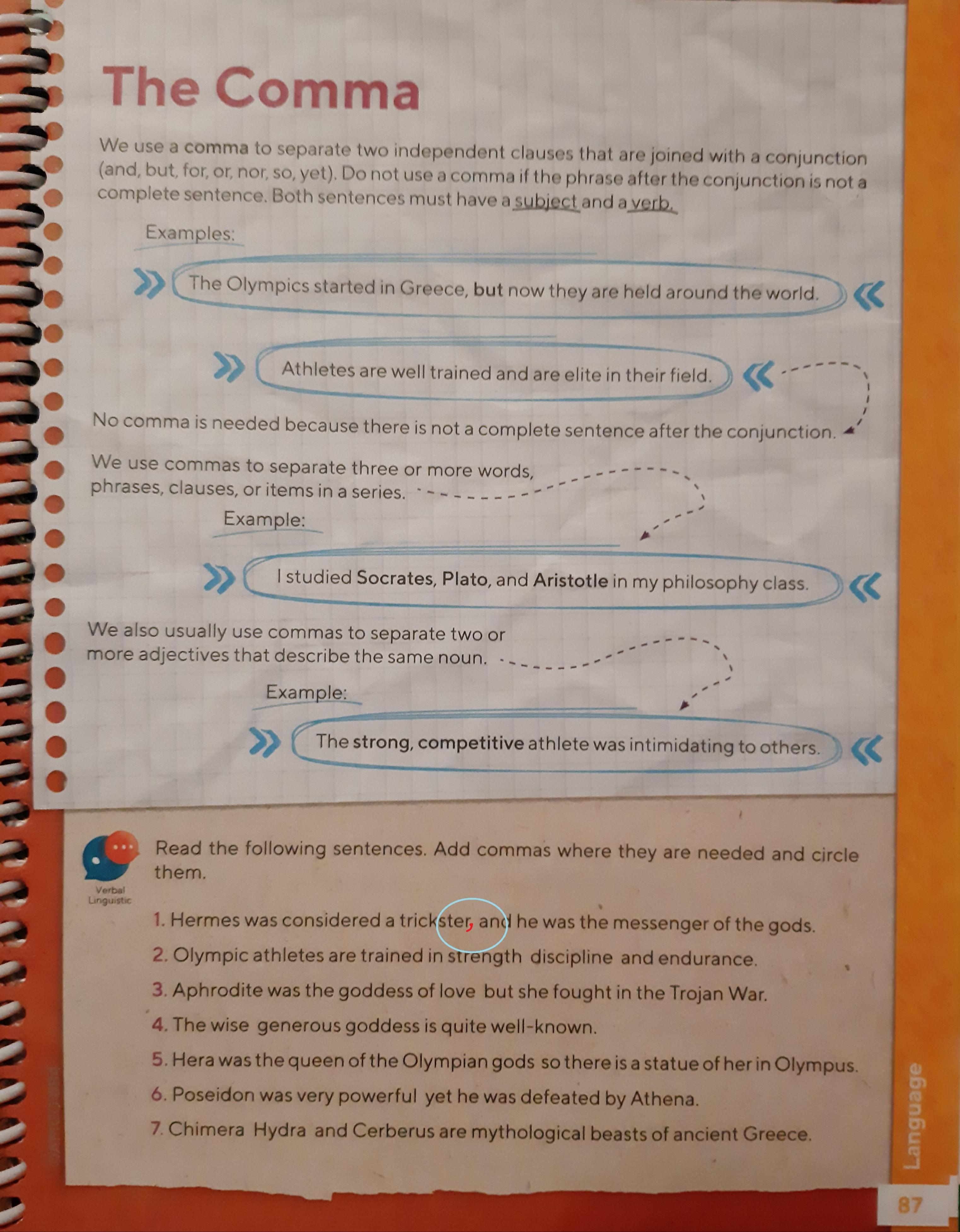
Open your book on page 87.
Watch video “When to use a comma”https://www.youtube.com/watch?v=uXQq4Ug1RIM
- Read the information in the first part of the page, identify and underline the most important.
- Go to the activity section in the bottom of the same page, read the sentences and add the commas when it is needed. Look at the picture Pg. 87, the first sentence is done for you as an example.
Then, go to page 88.
- Read the information at the top of the page, identify and underline the most important.
- Look at the first activity, and using the box, choose an introductory clause to fit each blank.
- Remember to add a comma after the introductory clause.
- Let’s move to the second exercise, read the questions and answer using your personal information. Use commas properly.
KNOWLEDGE OF THE WORLD
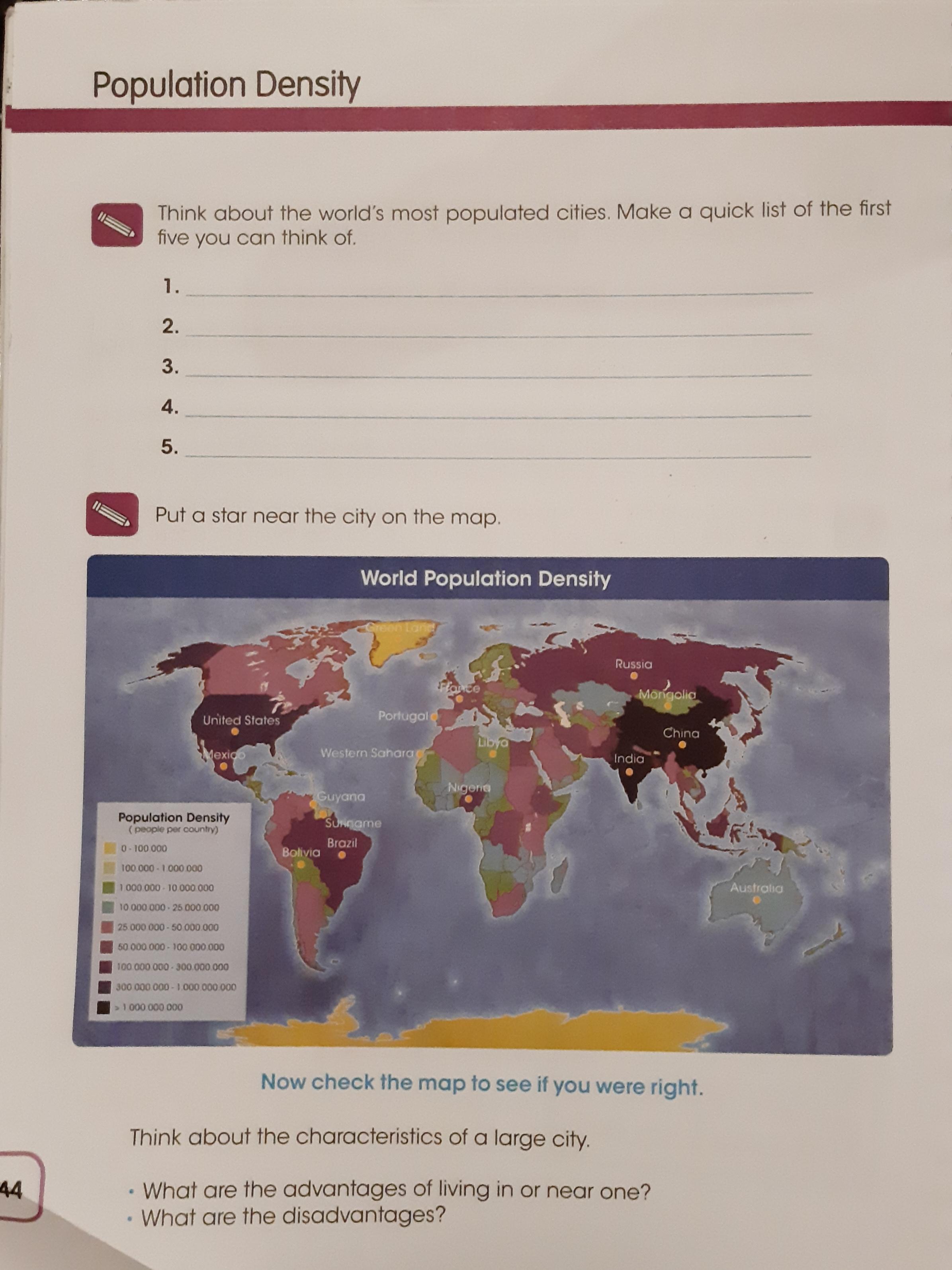
- Think about the world's most populated cities. Make a quick list of the first five you can think of.
- After this, look at the following video and compare your answers to it. https://www.youtube.com/watch?v=NFKQtMNqJuc
- Look at the map and put a star near each city.
- Copy the date, and put a margin of purple color.
- Write the title: "Population Density"
- Then, write the characteristics of a large city.
- Write and answer the following questions: What are the advantages of living in or near a large city? What are the disadvantages?
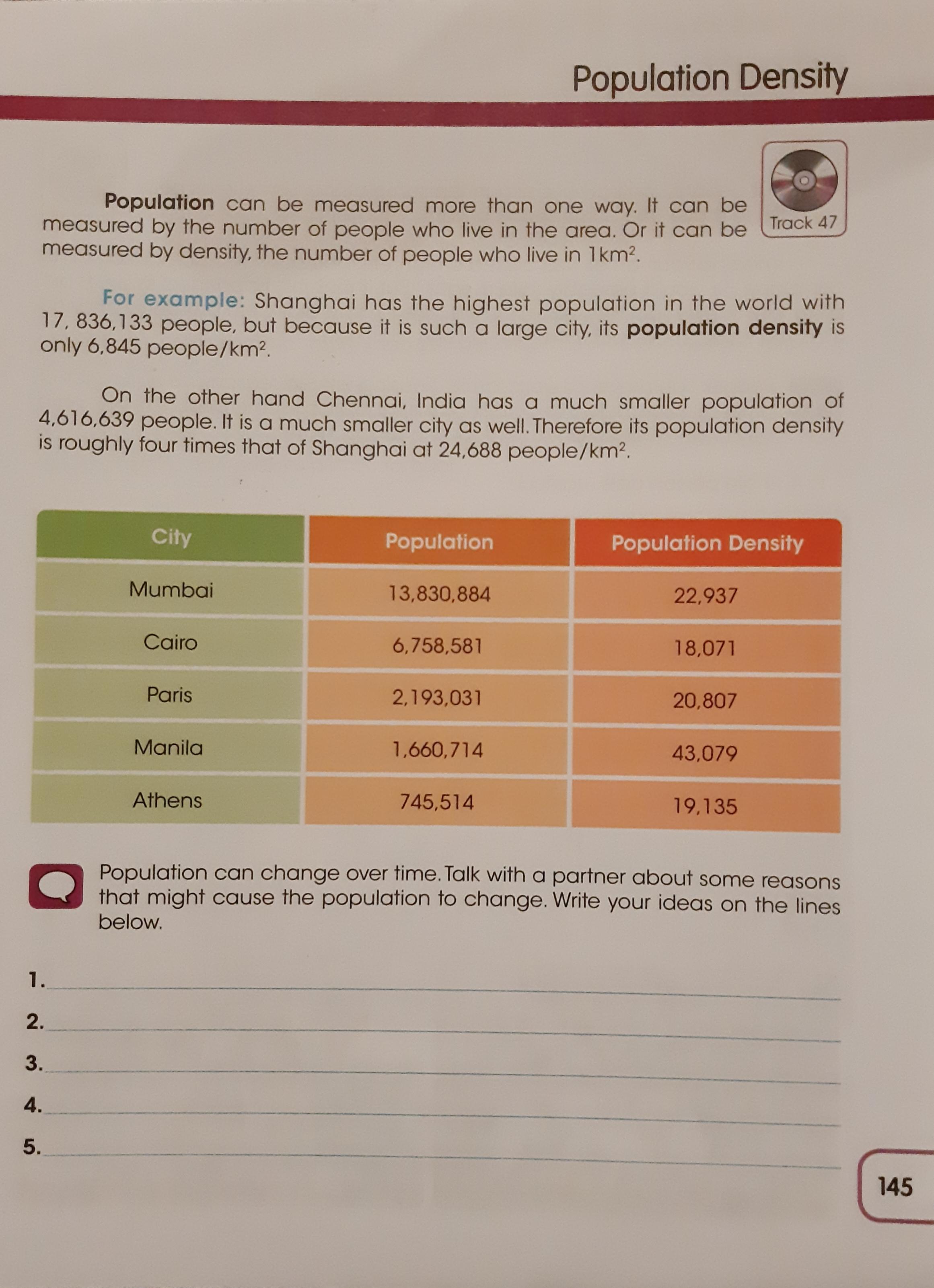
- Play the track 47, listen and follow the lesson.
- Underline the information that you consider is the most important.
- Then, at the bottom of the page write five reasons that might cause the population to change.
Vencimiento:
Assignment
Friday, March 27th, 2020.
DAILY ROUTINE
Good morning and welcome! Today we finish the first week of our on-line classes. Also, weekend is almost here! Aren’t you excited? I am! XD
Ok, let’s start!
= Identify today’s date and say it out loud using a full sentence: “Today is …”.
= Look outside the window and notice today’s weather. Say it out loud: “Today is a ______ day”
= How do you feel about the quarantine? Why? Answer out loud: “I feel ______ about the quarantine because _______________”.
Write down your answers on your notebook.
Great!
Now, watch the following video https://www.youtube.com/watch?v=fcWwsgEYjNg.
VISUAL ARTS
Objectives:
= Review vocabulary.
= Practice coordination and gross motor skills
= Identify and appreciate the main characteristics of Spanish artwork.
= Reflect about the country’s traditions.
= Demonstrate art skills.
Instructions:
Prepare your materials: pencil, eraser, ruler, compass, markers and colored pencils.
Watch the video “Monument a la Sardana”
Watch the video “La Sardana Dance” and dance along, invite your family to join you.
Write the vocabulary words in your notebook. Illustrate them using drawings or pictures. (Title: Josep Cañas’s Artwork):
proportion, culture, tradition custom, typical, civil war, monument, self taught.
Listen to the vocabulary words in the first part of Track 32 and repeat them aloud.
Open your Visual Arts book on page 45.
Listen about Josep Cañas in the second part of Track 32 following the reading by pointing with your finger.
Listen the last part of Track 32. Pause after every question and write the answer in your notebook.
Read very carefully the instructions on page 46 and proceed to create and design your city. You must include in your drawing all the details described in the instructions.
That is all for today. Enjoy the rest of the day and the weekend!
“See you” next week!
Remember to send pictures of ALL your work (notebook and books pages) to my e-mail: [email protected], writing your name and date as Subject (Asunto).
Vencimiento:
Assignment
Thursday, March 26th, 2020.
| Page 33 |
Imagine you are people in the city... Write 2 positive and 2 negative aspects about the importance to have one protector for each city.
Imagine you are a god or a goddess and write 2 posite and 2 negative aspects about the importance to have one protector for each city.
|
| Page 34 |
Write a paragraph about 10 lines where you explain how your city got its name.
On a separare piece of paper create a drawing for your story.
|
| Page 85 | Underline with red color the direct object. Circle with yellow color the indirect object |
| Page 86 |
PART 1: Identify and write the bold word ( subject, direct object or indirect objects)
PART 2: Create your own setences, using the suggested words but, the sentences have to include one direct object and one indirect object.
|
Vencimiento:
Assignment
Monday, March 23rd, 2020.
DAILY ROUTINE
Objective:
= Activate the switching process by practicing listening.
Instructions:
Listen to the "DR6 23" audio. Then, watch the video of Athena and Poseidon.
READING
Objective:
= Comprehend and identify the main ideas and details of a text.
Instructions:
1. With eyes closed, listen “Track 10”, and picture in your mind the story described.
2. Listen to the audio again, now following the reading on pages 28 to 30 on your Lead book. Don’t forget to fill in the blanks with the missing words.
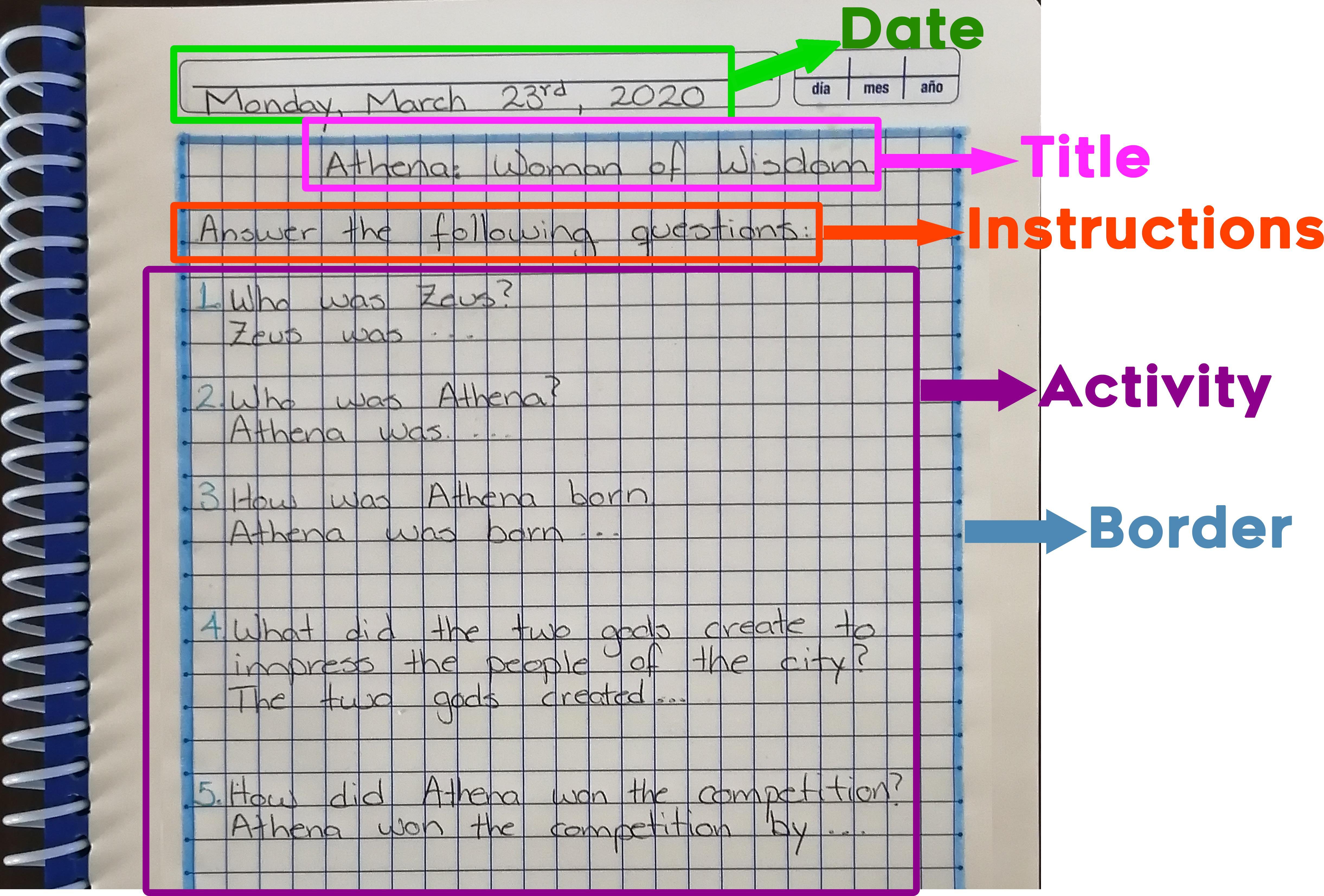
3. Read again the story, this time highlight the main ideas of each paragraphs. To check your understanding, write and answer the following questions in your notebook:
Who was Zeus?
Who was Athena?
How was Athena born?
What did the two gods create to impress the people of the city?
How did Athena win the competition?
4. Complete the Verbal Linguistic activity on page 31. You have to describe the events that lead to Athena’s birth; that is what happened first, second and last for Athena to be born.
5. Brainstorm about the pros and cons of having power over the seas and having the power of wisdom. Write down your ideas in the Team Work section of page 31.
Have an amazing day!
Don’t forget to send pictures of ALL your work (notebook and books pages) to my e-mail: [email protected]